OBD-II Diagnostics: The Basics
Beginner → Intermediate · 12 questions
Test what you actually understand about OBD-II trouble codes, fuel trims, oxygen sensors, and what your Check Engine Light is really telling you. 12 questions, each with a plain-English explanation.
-
1. In a trouble code like P0420, what does the first letter "P" stand for?
- A. Powertrain ✓
- B. Performance
- C. Pressure
- D. Primary
Answer: A — Powertrain. P = Powertrain (engine and transmission). The other three families are B = Body, C = Chassis, and U = Network/communication.
-
2. A code that starts with P0 (like P0300) is best described as:
- A. A manufacturer-specific code only your dealer can read
- B. A generic, SAE-standard code that means the same thing on most makes ✓
- C. A code that only sets on diesel engines
- D. A code that always means the engine must be replaced
Answer: B — A generic, SAE-standard code that means the same thing on most makes. P0 codes are generic (SAE-standardized), so P0300 means the same thing across brands. Codes beginning with P1 are manufacturer-specific.
-
3. P0301 tells you there is a misfire in:
- A. Bank 1 overall
- B. Ignition coil #3
- C. Cylinder #1 ✓
- D. All cylinders at once
Answer: C — Cylinder #1. On Pxxxx misfire codes the last digit is the cylinder number, so P0301 = cylinder 1. P0300 (last digit 0) means a random/multiple-cylinder misfire.
-
4. If your Check Engine Light is FLASHING rather than glowing steadily, it usually means:
- A. The bulb is about to burn out
- B. It's just a scheduled-maintenance reminder
- C. Your oil is low
- D. An active misfire is dumping raw fuel into the exhaust and can destroy the catalytic converter — ease off and get it checked now ✓
Answer: D — An active misfire is dumping raw fuel into the exhaust and can destroy the catalytic converter — ease off and get it checked now. A flashing MIL signals a severe, active misfire. Unburned fuel reaching the catalytic converter overheats it, so reduce load and diagnose immediately.
-
5. OBD-II became mandatory on cars and light trucks sold in the United States starting with model year:
- A. 1996 ✓
- B. 1988
- C. 2004
- D. 2010
Answer: A — 1996. The EPA required OBD-II on all US-market cars and light trucks from model year 1996, which is why the standard 16-pin port and generic codes exist on virtually every car since then.
-
6. P0420 ("Catalyst Efficiency Below Threshold") usually points to a tired catalytic converter — but before buying that expensive part, you should first rule out:
- A. Low tire pressure
- B. Faulty oxygen sensors or an exhaust leak ✓
- C. A weak alternator
- D. A dirty cabin air filter
Answer: B — Faulty oxygen sensors or an exhaust leak. A lazy O2 sensor or a leak ahead of the sensor can mimic a failing cat and set P0420. Both are far cheaper to fix, so verify them before replacing the converter.
-
7. A long-term fuel trim reading of +20% means the engine computer is:
- A. Removing fuel because the engine is running rich
- B. Reporting a healthy, perfectly balanced mixture
- C. Adding fuel to compensate for a lean condition ✓
- D. Measuring coolant temperature
Answer: C — Adding fuel to compensate for a lean condition. Positive fuel trim = the ECU is adding fuel because it sees a lean mixture. Common causes of a large positive trim are vacuum (unmetered air) leaks or weak fuel delivery.
-
8. The job of the UPSTREAM (pre-converter) oxygen sensor is to:
- A. Check whether the catalytic converter is working
- B. Control the transmission shift points
- C. Read the coolant temperature
- D. Measure exhaust oxygen so the computer can fine-tune the air/fuel mixture ✓
Answer: D — Measure exhaust oxygen so the computer can fine-tune the air/fuel mixture. The upstream sensor drives fuel trim (air/fuel control). The DOWNSTREAM sensor, after the converter, is what monitors catalytic-converter efficiency.
-
9. "Freeze frame" data stored with a trouble code is:
- A. A snapshot of the engine's operating conditions at the moment the code set ✓
- B. A video of the dashboard
- C. The factory wiring diagram
- D. A list of every code the car has ever had
Answer: A — A snapshot of the engine's operating conditions at the moment the code set. Freeze frame captures RPM, load, temperature, speed, fuel trims, etc. at the instant the fault triggered — gold for figuring out the conditions that caused it.
-
10. A code that begins with "U" (such as U0100) relates to:
- A. The fuel system
- B. The communication network between control modules ✓
- C. The brakes and ABS
- D. The airbags
Answer: B — The communication network between control modules. U = Network/communication (e.g. the CAN bus). U-codes often mean a module isn't talking to the others — frequently a wiring, connector, or power/ground issue.
-
11. P0171 is "System Too Lean (Bank 1)." The cheapest things to check first are:
- A. The catalytic converter and the muffler
- B. The starter motor and battery
- C. Vacuum (unmetered air) leaks and a dirty mass airflow (MAF) sensor ✓
- D. The brake pads
Answer: C — Vacuum (unmetered air) leaks and a dirty mass airflow (MAF) sensor. A lean code most often comes from extra air the computer didn't measure (a vacuum leak) or a MAF sensor reading low. Check and clean those before suspecting injectors or the fuel pump.
-
12. To pass an emissions/smog test, a vehicle's "readiness monitors" must be:
- A. Showing at least one stored code
- B. Disconnected
- C. Reset to factory by the dealer only
- D. Set to ready/complete — and clearing codes resets them, so you may need to drive a full cycle first ✓
Answer: D — Set to ready/complete — and clearing codes resets them, so you may need to drive a full cycle first. Monitors are self-tests that must run and report 'complete' to pass. Clearing codes (or a dead battery) wipes them, so drive a normal mix of conditions to let them re-run before testing.
Codes covered in this quiz
Look up the full diagnosis, causes, and fixes for any code these questions reference:
Want to go deeper?
Reputable study materials and a scan tool to actually master this — honest picks, not filler.
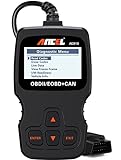
Affiliate links — we earn a commission at no extra cost to you.
Want to look up a specific code? Browse all OBD-II codes · Read the repair guides · More quizzes
Educational use only. Always follow your vehicle's service information and safety precautions when diagnosing or repairing.