Automatic Transmission & Drivetrain (ASE A2)
Intermediate · 39 questions
Verified ASE A2-style practice questions on automatic transmissions and drivetrain — torque converters and stall testing, planetary gearsets and apply devices, hydraulic line pressure and valve bodies, electronic shift controls and adaptives, plus CV joints, U-joints, differentials and transaxles — each with a plain-English explanation that teaches the why.
-
1. A customer's automatic shifts late and slips on a hard pull. Before pulling codes or dropping the pan, what is the correct first diagnostic step?
- A. Check the ATF level and condition (color and smell) following the manufacturer's procedure ✓
- B. Replace the shift solenoid pack on suspicion
- C. Flush the transmission and install a shift kit
- D. Replace the torque converter
Answer: A — Check the ATF level and condition (color and smell) following the manufacturer's procedure. ATF level and condition is always step one. Fluid that's low (from a leak), overfull (aerated and foaming), or burnt will cause slipping, late shifts, and flares all by itself, and you can't trust anything else until it's right. Healthy ATF is clean and red/pink with no burnt odor; dark brown or black fluid that smells scorched means overheated, oxidized fluid and worn friction material. Check it the way the maker specifies (many are at operating temperature, in gear, on level ground; some are sealed with a fill plug and no dipstick). Replacing parts before verifying fluid is guessing.
-
2. You pull the dipstick and the ATF is dark brown, smells burnt, and feels gritty. What does this most directly indicate?
- A. Perfectly normal fluid that just needs topping off
- B. Overheated fluid and worn clutch/band friction material circulating in the system ✓
- C. Water intrusion from the cooling system only
- D. A faulty transmission temperature sensor reading high
Answer: B — Overheated fluid and worn clutch/band friction material circulating in the system. A burnt smell with dark color is classic overheated ATF: the fluid has oxidized and the clutch and band friction linings have been overheated and are shedding material, which is the grit you feel. By the time fluid is burnt, internal damage has usually already happened, so a simple fluid change rarely 'fixes' a slipping unit and can sometimes make a high-mileage unit worse. (Pink, milky fluid is the separate water-intrusion symptom from a failed cooler.) This finding tells you to investigate internal wear, not just service the fluid.
-
3. A vehicle sets P0700. The tech connects a scanner and the transmission seems to drive normally otherwise. What does P0700 actually tell you?
- A. The torque converter clutch circuit is shorted
- B. The output speed sensor has failed
- C. The TCM has detected a transmission fault and requested the MIL; it's a pointer — look for the specific transmission code that accompanies it ✓
- D. The transmission control module itself must be replaced
Answer: C — The TCM has detected a transmission fault and requested the MIL; it's a pointer — look for the specific transmission code that accompanies it. P0700 is a generic 'transmission control system malfunction (MIL request)' flag. On most vehicles the TCM is a separate module, so it uses P0700 to tell the engine computer to turn on the MIL, then stores the real, more specific code (for example P0740 for the converter clutch or P0753 for a shift solenoid circuit) in the TCM's own memory. So P0700 by itself isn't the fault — it's a signpost. Read the manufacturer-specific or TCM sub-codes to find what actually triggered it. Don't condemn the TCM over a P0700.
-
4. P0730 'Incorrect Gear Ratio' is stored. How does the TCM arrive at this fault?
- A. It reads a single dedicated 'gear ratio sensor' mounted on the output shaft
- B. It detects low battery voltage at the TCM
- C. It measures engine RPM against vehicle speed only, ignoring the input shaft
- D. It compares input (turbine) speed to output speed; the ratio doesn't match the commanded gear, so a clutch/band is slipping or a solenoid isn't applying the right element ✓
Answer: D — It compares input (turbine) speed to output speed; the ratio doesn't match the commanded gear, so a clutch/band is slipping or a solenoid isn't applying the right element. The TCM continuously divides input/turbine speed by output speed to calculate the actual gear ratio, then compares it to the ratio it commanded. If they don't agree (input shaft spinning faster than the output ratio should allow), a friction element is slipping or the wrong element is applied, and it sets P0730. Common causes are worn clutches, a stuck shift solenoid or valve, or low/contaminated fluid. There is no single 'gear ratio sensor' — the ratio is computed from the input and output speed sensors, which is why those sensors must be working for this diagnosis to be valid.
-
5. What is the practical difference between the input (turbine) speed sensor and the output speed sensor, and why does the TCM need both?
- A. The input sensor measures turbine/input-shaft speed and the output sensor measures output-shaft (vehicle) speed; comparing the two lets the TCM verify gear ratio and detect slip ✓
- B. Both measure the same shaft for redundancy and either one alone is enough
- C. The input sensor measures engine RPM and the output sensor measures coolant temperature
- D. Only the output sensor matters; the input sensor just feeds the speedometer
Answer: A — The input sensor measures turbine/input-shaft speed and the output sensor measures output-shaft (vehicle) speed; comparing the two lets the TCM verify gear ratio and detect slip. The input/turbine speed sensor (codes in the P0715-P0717 area) reads how fast the converter turbine and input shaft are turning; the output speed sensor (P0720-P0722 area) reads output-shaft speed, which also drives the speedometer/VSS function. The TCM needs both because the ratio between them is how it confirms the transmission is actually in the gear it commanded and how it detects slip. Lose the input signal and it can't calculate ratio or do smooth converter lockup; lose the output signal and it loses road speed reference. A bad sensor or reluctor often triggers harsh shifts or limp mode.
-
6. P0740 'Torque Converter Clutch (TCC) Circuit Malfunction' is set. What is the TCC and what symptom does a lockup problem commonly produce?
- A. The clutch pedal switch on a manual transmission
- B. A clutch inside the torque converter that mechanically locks it to eliminate slip at cruise; faults cause a shudder, no lockup, or stalling/RPM that won't drop on the highway ✓
- C. A band that holds reverse gear
- D. The clutch that engages the air-conditioning compressor
Answer: B — A clutch inside the torque converter that mechanically locks it to eliminate slip at cruise; faults cause a shudder, no lockup, or stalling/RPM that won't drop on the highway. At steady cruise the TCC mechanically locks the converter so the engine and transmission turn as one, eliminating the fluid-coupling slip and improving fuel economy and heat. P0740 flags an electrical/performance problem in that circuit or its solenoid. Symptoms include a shudder (often felt around 40-60 mph as lockup engages, frequently from degraded fluid or a worn converter), the converter never locking (RPM stays high, fluid runs hot), or, with a stuck-on lockup, the engine stalling like a manual when you stop. Verify fluid condition first — bad ATF is a leading cause of TCC shudder.
-
7. Shift solenoid codes fall in the P0750-P0770 range. Where do these solenoids live and what do they do?
- A. They are the wheel speed sensors at each hub
- B. They are vacuum solenoids on the intake manifold
- C. They are electro-hydraulic valves in the valve body that the TCM energizes to route fluid pressure and apply/release clutches and bands for shifting ✓
- D. They are the engine fuel injectors operating in pairs
Answer: C — They are electro-hydraulic valves in the valve body that the TCM energizes to route fluid pressure and apply/release clutches and bands for shifting. Shift solenoids (Shift Solenoid A = P0750-P0753, B = P0755-P0758, C = P0760-P0763, D = P0765-P0768, E = P0770+) sit in the valve body. The TCM energizes them to direct pressurized ATF to the right clutch packs and bands, producing each gear change. A failed solenoid or its circuit causes a missing gear, harsh or delayed shifts, or limp mode. The codes break down by job: '...3' style endings (e.g., P0753) are electrical/circuit faults, while 'performance/stuck' variants flag a solenoid that's mechanically not doing its job. Dirty fluid varnishing a valve is a very common real-world cause.
-
8. A transmission suddenly will only stay in one gear (commonly third), has no other shifts, and the MIL is on. What is the most likely overall condition?
- A. The torque converter has completely disintegrated
- B. The transmission is simply low on fluid and will recover on its own
- C. The engine is misfiring and dragging the transmission down
- D. The TCM has entered limp/failsafe mode after detecting a fault, deliberately holding one gear to protect the unit and get the vehicle home ✓
Answer: D — The TCM has entered limp/failsafe mode after detecting a fault, deliberately holding one gear to protect the unit and get the vehicle home. Holding a single gear with the MIL on is the textbook signature of limp (failsafe) mode. When the TCM sees a fault it can't safely shift around — a speed sensor dropout, a solenoid circuit fault, severe ratio error, or overheating — it de-energizes the solenoids to a default state that yields one drivable gear (often 3rd or 2nd, plus reverse) so you can limp it in without grenading the unit. The fix is to read the stored code(s) and address the root cause; clearing the code without fixing it just lets the transmission re-enter limp mode.
-
9. Match the symptom to the fault: the customer describes the engine RPM 'flaring up' (briefly racing) during an upshift before the next gear catches. This is best described as:
- A. A flare/slip — the clutch or band for the next gear isn't applying quickly or firmly enough, so engine speed runs away momentarily before engagement ✓
- B. Normal torque converter lockup engaging
- C. A harsh shift caused by too much line pressure
- D. A delayed engagement from cold fluid only
Answer: A — A flare/slip — the clutch or band for the next gear isn't applying quickly or firmly enough, so engine speed runs away momentarily before engagement. A flare is a momentary loss of grip during a shift: the oncoming clutch or band hasn't applied (or the off-going one releases too soon), so for an instant nothing is fully holding and engine RPM jumps before the gear bites. Causes include worn friction material, low line pressure, a leaking clutch seal, or degraded fluid. Distinguish it from a harsh shift (a hard bang from too much pressure or quick apply) and from delayed engagement (a long pause before the transmission engages at all, often worse when cold), which point in different directions. Naming the symptom precisely steers the diagnosis.
-
10. A shop tops off an automatic with a generic 'universal' ATF instead of the manufacturer-specified fluid. A few hundred miles later the customer reports a shudder and erratic shifts. What's the likely explanation?
- A. Adding any ATF always cures shudder, so the fluid is unrelated
- B. Wrong fluid — ATF friction modifiers and viscosity are spec-specific; the incorrect frictional properties cause TCC shudder and shift quality problems ✓
- C. Universal fluids are chemically identical to every OEM spec
- D. The shudder proves the torque converter physically cracked from the fluid
Answer: B — Wrong fluid — ATF friction modifiers and viscosity are spec-specific; the incorrect frictional properties cause TCC shudder and shift quality problems. Modern automatics are extremely sensitive to ATF specification because the fluid's friction modifiers are tuned to the exact clutch material and the converter lockup strategy. Use a fluid with the wrong frictional characteristics or viscosity (for example a non-LV fluid where a low-viscosity spec is required, or a non-compatible 'universal' blend) and you get converter-clutch shudder, harsh or hunting shifts, and accelerated wear. Always use the fluid that meets the OEM specification (Dexron/Mercon variants, Toyota WS, Honda DW-1, ATF+4, etc.). 'It's all just ATF' is a costly myth.
-
11. How does a CVT (continuously variable transmission) fundamentally differ from a conventional planetary automatic, and what does that mean for service?
- A. A CVT is just an automatic with extra forward gears and uses the same ATF
- B. A CVT has no fluid and is sealed for life with grease
- C. A CVT uses a steel belt or chain on variable-width pulleys to give infinite ratios with no fixed gear steps, and it requires its own specific CVT fluid — never conventional ATF ✓
- D. A CVT shifts with the same shift solenoids and clutch packs as a planetary automatic
Answer: C — A CVT uses a steel belt or chain on variable-width pulleys to give infinite ratios with no fixed gear steps, and it requires its own specific CVT fluid — never conventional ATF. A conventional automatic uses planetary gearsets, clutches, and bands to provide a fixed number of distinct ratios. A pushbelt/chain CVT instead runs a steel belt or chain between two variable-width (variator) pulleys; squeezing the pulleys narrower or wider changes the effective ratio continuously, so there are no discrete shifts and engine RPM can hold steady while road speed climbs. Critically, CVTs require their own dedicated CVT fluid engineered for belt-to-pulley traction; putting regular ATF in a CVT can cause belt slip and destroy it. Many also use a small launch clutch or torque converter, but the variator, not gear sets, sets the ratio.
-
12. A vehicle has a long delay before it engages when shifted into Drive or Reverse, especially noticeable first thing in the morning. ATF level is correct. What does this symptom most point toward?
- A. A perfectly healthy transmission; all automatics do this when cold
- B. A bad output speed sensor by itself
- C. A loose gas cap setting an EVAP code
- D. Internal wear or low apply pressure — worn clutch packs, a failing pump, or leak-down past seals/valves so it takes time to build enough pressure to engage ✓
Answer: D — Internal wear or low apply pressure — worn clutch packs, a failing pump, or leak-down past seals/valves so it takes time to build enough pressure to engage. Delayed engagement — that 1-to-several-second pause before Drive or Reverse 'catches,' worst after sitting overnight — is a hydraulic pressure problem. Overnight the fluid drains down past worn seals, a tired pump, or leaking valve-body passages, so when you select a gear the system has to rebuild apply pressure before the clutches grab. It commonly signals internal wear and a transmission that's on its way toward bigger problems. It is not normal, and with correct fluid level it's not a quick cold-flow excuse. (A speed sensor or an EVAP code has nothing to do with engagement timing.)
-
13. What are the three main elements inside a torque converter, and which one multiplies torque?
- A. Impeller (pump), turbine, and stator — the stator multiplies torque at low speed via its one-way clutch ✓
- B. Sun gear, ring gear, and carrier
- C. Primary, secondary, and reverse shoes
- D. Rotor, stator, and commutator
Answer: A — Impeller (pump), turbine, and stator — the stator multiplies torque at low speed via its one-way clutch. A torque converter has an impeller (pump) driven by the engine, a turbine that drives the transmission input shaft, and a stator between them. The stator redirects fluid returning from the turbine back into the impeller, multiplying torque at low speed; its one-way (overrunning) clutch lets it freewheel once the turbine speeds up (coupling phase). Planetary members (sun/ring/carrier) and brake shoes are different assemblies; rotor/commutator are motor parts.
-
14. During a torque-converter stall test, the stall RPM is significantly HIGHER than specification. What does this indicate?
- A. A stator one-way clutch that is slipping
- B. Slipping clutches or bands in the transmission (it isn't holding) ✓
- C. A perfectly healthy transmission
- D. A clogged cabin air filter
Answer: B — Slipping clutches or bands in the transmission (it isn't holding). In a stall test (brakes locked, brief wide-open throttle, read max RPM) a HIGHER-than-spec stall speed means the transmission isn't holding the engine — slipping clutches or bands let RPM run up past spec. A LOWER-than-spec stall points to a slipping stator one-way clutch in the converter (no torque multiplication) or a weak engine. Stall tests are brief and hard on the unit, so follow the procedure. The cabin filter is unrelated.
-
15. A torque converter multiplies torque at low speed but behaves differently at cruising speed. What changes?
- A. It multiplies torque more and more the faster you go
- B. It disconnects the engine entirely above idle
- C. As turbine speed approaches impeller speed, the stator freewheels and the converter acts essentially as a fluid coupling (about 1:1) ✓
- D. It reverses engine rotation
Answer: C — As turbine speed approaches impeller speed, the stator freewheels and the converter acts essentially as a fluid coupling (about 1:1). At low speed/high slip the stator is locked and redirects fluid to multiply torque (often up to roughly 2-2.5x). As the turbine catches up to the impeller, fluid hits the back of the stator vanes, its one-way clutch releases, and the stator spins freely — the converter then just couples engine to transmission near 1:1 (and the TCC may lock for efficiency). It doesn't keep multiplying with speed, disconnect the engine, or reverse rotation.
-
16. What does a transmission line-pressure test help you determine?
- A. The exact gear ratio in fourth gear
- B. Engine compression
- C. Coolant temperature
- D. Whether the pump, pressure regulator, and circuits make correct pressure — low in ALL ranges points to the pump/regulator/filter or a major leak; low in ONE range points to a circuit-specific leak ✓
Answer: D — Whether the pump, pressure regulator, and circuits make correct pressure — low in ALL ranges points to the pump/regulator/filter or a major leak; low in ONE range points to a circuit-specific leak. Hooking a gauge to the line-pressure port and reading pressure in each range tells you a lot: pressure that's low in every range points to a worn pump, a faulty pressure regulator/EPC, a plugged filter, or a large internal leak; pressure low in only one range points to a leak in that specific apply circuit/seal. It's a core hydraulic diagnostic. It doesn't read gear ratios, engine compression, or coolant temp.
-
17. In a planetary gearset, how is a given gear ratio (reduction, overdrive, reverse, or direct) produced?
- A. By holding one member (sun, ring, or carrier), driving another, and taking output from the third ✓
- B. By changing the diameter of the gears on the fly
- C. By swapping the fluid type
- D. By reversing the oil pump
Answer: A — By holding one member (sun, ring, or carrier), driving another, and taking output from the third. A simple planetary set has a sun gear, a ring gear, and a carrier (with planet pinions). The transmission's clutches and bands hold one member stationary and drive another; which member is held versus driven versus output determines reduction, overdrive, direct drive, or reverse. Combining planetary sets yields all the forward gears. Gears don't change diameter, and fluid/pump direction don't create ratios — the held/driven members do.
-
18. What is the role of the clutches and bands inside an automatic transmission?
- A. They rectify AC into DC
- B. They are the apply devices that hold or drive planetary members to engage each gear; a worn clutch pack slips in the gear that uses it ✓
- C. They store brake fluid
- D. They cool the engine oil
Answer: B — They are the apply devices that hold or drive planetary members to engage each gear; a worn clutch pack slips in the gear that uses it. Multi-disc clutch packs and bands are the apply devices: hydraulic pressure applies them to hold or couple specific planetary members, engaging a given gear. When a clutch pack or band wears or loses apply pressure, the transmission slips in whichever gear depends on that device (e.g., a worn 3-4 clutch slips in those gears). They don't rectify current, store brake fluid, or cool engine oil.
-
19. The valve body in an automatic transmission does what, and how can it cause a shift fault?
- A. It generates spark for the engine
- B. It filters the engine's intake air
- C. It routes hydraulic pressure to the apply devices; worn bores or stuck valves (cross-leaks) cause specific shift problems like a harsh or missing shift ✓
- D. It stores the transmission's computer code
Answer: C — It routes hydraulic pressure to the apply devices; worn bores or stuck valves (cross-leaks) cause specific shift problems like a harsh or missing shift. The valve body is the hydraulic control center — a maze of valves and passages (and solenoids) that directs pressurized fluid to apply the right clutches/bands at the right time. Worn valve bores, stuck valves, or internal cross-leaks send pressure where it shouldn't go, causing specific symptoms: a harsh or soft shift, a missing gear, or a tie-up. It has nothing to do with spark, air filtering, or storing software.
-
20. An electronic pressure control (EPC) / line-pressure solenoid failure most directly causes what?
- A. Brighter headlights
- B. A coolant leak
- C. A no-crank condition
- D. Incorrect line pressure — leading to harsh shifts (too high) or soft/slipping shifts (too low), often with a limp mode ✓
Answer: D — Incorrect line pressure — leading to harsh shifts (too high) or soft/slipping shifts (too low), often with a limp mode. The EPC (or variable-force/line-pressure) solenoid regulates main line pressure for proper clutch apply and shift feel. If it fails or reads wrong, pressure goes too high (harsh, banging shifts) or too low (soft, slipping shifts that burn clutches), and the TCM often drops to a fixed high-pressure limp mode to protect the unit. It doesn't affect lighting, coolant, or cranking.
-
21. What is the purpose of an accumulator in an automatic transmission's hydraulic circuit?
- A. To cushion the apply of a clutch or band for a smooth shift; a failed accumulator causes harsh shifts ✓
- B. To store extra ATF for emergencies
- C. To increase engine vacuum
- D. To filter the fuel
Answer: A — To cushion the apply of a clutch or band for a smooth shift; a failed accumulator causes harsh shifts. An accumulator absorbs and gradually builds the apply pressure to a clutch or band so the shift is smooth rather than abrupt — like a hydraulic shock absorber for shifts. A worn accumulator piston/seal or weak accumulator spring lets the apply happen too fast, producing harsh/banging shifts. It isn't a fluid reservoir, vacuum source, or fuel filter.
-
22. Modern automatics use different solenoid types. What is the difference between an on/off shift solenoid and a PWM (pulse-width-modulated) / variable-force solenoid?
- A. On/off solenoids are larger and only used on diesels
- B. On/off solenoids simply switch a circuit, while PWM/variable solenoids modulate pressure proportionally for precise shift feel and pressure control ✓
- C. PWM solenoids run on 120 volts AC
- D. There is no functional difference
Answer: B — On/off solenoids simply switch a circuit, while PWM/variable solenoids modulate pressure proportionally for precise shift feel and pressure control. Simple on/off (shift) solenoids just open or close a hydraulic circuit. PWM/variable-force (linear) solenoids are pulsed or current-controlled so they meter pressure proportionally, letting the TCM control apply rates and line pressure precisely for smooth, adaptive shifts and TCC modulation. Knowing which type a circuit uses guides testing (resistance/duty cycle vs simple continuity). They don't run on household AC, and the difference is very real.
-
23. A faulty transmission range (TR / PRNDL) sensor can cause which set of symptoms?
- A. Only a dead radio
- B. Brighter brake lights
- C. A wrong gear-position display, a no-crank in Park/Neutral, and/or the wrong shift schedule or a default/limp mode ✓
- D. A coolant leak
Answer: C — A wrong gear-position display, a no-crank in Park/Neutral, and/or the wrong shift schedule or a default/limp mode. The transmission range sensor tells the PCM/TCM which gear the driver selected. When it's faulty or misadjusted it can mismatch the gear indicator, prevent cranking (the start circuit only allows Park/Neutral), command the wrong shift schedule, or force a default/limp strategy. It's a commonly overlooked cause of no-crank and shift complaints. It doesn't selectively kill the radio, brighten brake lights, or leak coolant.
-
24. After a transmission is rebuilt/replaced (or the battery is disconnected), the customer reports harsh or oddly timed shifts. What is often the cause?
- A. The catalytic converter failed
- B. The wheel bearings are worn
- C. The cabin filter is clogged
- D. The TCM's adaptive shift values were reset and need to relearn (or be reset/relearned with a scan tool) as the vehicle is driven ✓
Answer: D — The TCM's adaptive shift values were reset and need to relearn (or be reset/relearned with a scan tool) as the vehicle is driven. Many TCMs continuously adapt clutch apply timing and pressure to wear. When those adaptive values are cleared — by a rebuild, TCM replacement, or battery disconnect — the transmission can shift harshly or oddly until it relearns, which may require a specific relearn drive cycle and/or a scan-tool adaptive reset. Skipping the relearn is a common 'comeback.' The cat, wheel bearings, and cabin filter don't affect shift adaptation.
-
25. A driver feels a shudder/vibration that comes and goes around a steady cruising speed, often described as driving over rumble strips. On many vehicles this points to:
- A. Torque-converter clutch (TCC) shudder — commonly from degraded fluid/friction modifier or a worn TCC lining ✓
- B. A failing alternator
- C. A clogged fuel injector at idle only
- D. Worn brake pads
Answer: A — Torque-converter clutch (TCC) shudder — commonly from degraded fluid/friction modifier or a worn TCC lining. A light shudder felt as the TCC engages/holds at cruise is classic torque-converter-clutch shudder, frequently caused by degraded ATF (lost friction modifiers) or a worn TCC friction surface; a fluid exchange sometimes cures early cases, while a worn converter needs replacement. Confirm it tracks TCC apply (not engine RPM or road speed alone) to separate it from driveline vibration. It isn't an alternator, idle-only injector, or brake issue.
-
26. Why is overheating considered the number-one killer of automatic transmissions?
- A. Heat improves shift quality over time
- B. Excessive heat breaks down the ATF, which then can't lubricate, cool, or apply clutches properly, accelerating internal wear ✓
- C. Heat only affects the radio
- D. ATF performs better the hotter it gets
Answer: B — Excessive heat breaks down the ATF, which then can't lubricate, cool, or apply clutches properly, accelerating internal wear. ATF both lubricates and acts as the hydraulic apply/cooling medium. Excess heat oxidizes and breaks it down (it darkens and smells burnt), so it loses film strength and the clutches slip and overheat further — a downward spiral. That's why coolers and proper fluid service matter, and why a transmission cooler should be flushed/replaced after a failure so debris doesn't kill the reman unit. ATF does not perform better hot, and heat doesn't help shift quality.
-
27. What does the park pawl do, and what's the safe practice on a hill?
- A. It applies the front brakes electrically
- B. It charges the battery in Park
- C. It mechanically locks the output/parking gear in Park; on a slope you should also set the parking brake rather than rely on the pawl alone ✓
- D. It cools the transmission
Answer: C — It mechanically locks the output/parking gear in Park; on a slope you should also set the parking brake rather than rely on the pawl alone. The park pawl is a pin that engages a parking gear on the output shaft to mechanically hold the vehicle in Park. On an incline, the pawl can take heavy load (and become hard to shift out of or wear), so good practice is to set the parking brake before shifting to Park (and release it after coming out of Park). It doesn't apply the service brakes, charge the battery, or cool the transmission.
-
28. A torque-converter stall test reads LOWER than specification and the vehicle feels sluggish off the line. What does this most likely indicate?
- A. Slipping transmission clutches
- B. An overcharged battery
- C. A clogged DPF
- D. A slipping stator one-way clutch in the converter (no torque multiplication) or a weak engine ✓
Answer: D — A slipping stator one-way clutch in the converter (no torque multiplication) or a weak engine. A lower-than-spec stall speed means the converter isn't multiplying torque the way it should — typically a stator one-way clutch that's slipping/freewheeling when it should lock, so you lose low-speed torque multiplication and feel sluggish acceleration. (A weak engine can also lower stall.) Higher-than-spec stall, by contrast, indicates the transmission is slipping. The battery and DPF aren't factors in stall speed.
-
29. An internal cross-leak in an automatic transmission (a worn seal or valve-body leak applying an unintended circuit) typically causes what?
- A. A bind-up/tie-up or a specific-gear slip, because pressure reaches a device it shouldn't ✓
- B. Louder exhaust
- C. A dead battery
- D. Brighter headlights
Answer: A — A bind-up/tie-up or a specific-gear slip, because pressure reaches a device it shouldn't. A cross-leak sends pressure to an apply device that should be released in that gear. Depending on which circuit, that can tie up the gearset (two devices applied at once, causing a bind, harsh engagement, or stall) or rob pressure so another device slips. These are isolated with pressure tests and air-checking the apply circuits. Cross-leaks don't change exhaust noise, battery charge, or lighting.
-
30. What is the correct general way to check fluid level on a conventional dipstick automatic, and what's different about a 'sealed' unit?
- A. Check it cold with the engine off only
- B. Check the dipstick unit hot, engine running, in the specified range on level ground; a sealed unit is checked at a specified fluid temperature via a fill/level plug because ATF expands with heat ✓
- C. Sealed units never need their level verified
- D. Use engine oil on the dipstick
Answer: B — Check the dipstick unit hot, engine running, in the specified range on level ground; a sealed unit is checked at a specified fluid temperature via a fill/level plug because ATF expands with heat. Most dipstick automatics are checked at operating temperature with the engine running, selector in the specified position, on level ground. Many modern transmissions are 'sealed' (no dipstick) and are checked through a fill/level plug at a specified fluid-temperature window — because ATF expands as it heats, checking cold gives a false (low) reading and overfilling. Either way you verify level/condition; you don't use engine oil, and sealed units still need correct level.
-
31. A front-wheel-drive car makes a rhythmic clicking/popping noise that gets worse during sharp turns. What is the most likely cause?
- A. A failing fuel pump
- B. A slipping serpentine belt
- C. A worn outer CV (constant-velocity) joint, often from a torn boot that let grease out and dirt in ✓
- D. A clogged catalytic converter
Answer: C — A worn outer CV (constant-velocity) joint, often from a torn boot that let grease out and dirt in. Clicking or popping that worsens on turns (especially sharp, low-speed turns) is the classic worn outer CV joint symptom. It usually starts when the CV boot tears, flinging grease and letting in dirt/water that destroy the joint. A torn boot caught early can be re-booted; a worn joint needs the joint or axle shaft replaced. A fuel pump whines, a belt squeals, and a clogged cat causes power loss — none click with steering.
-
32. A rear-wheel-drive vehicle has a clunk when shifting from Drive to Reverse and a vibration that increases with speed. A likely driveline cause is:
- A. A discharged battery
- B. A clogged cabin air filter
- C. Low brake fluid
- D. A worn driveshaft universal (U) joint ✓
Answer: D — A worn driveshaft universal (U) joint. A worn or dry U-joint in the driveshaft commonly causes a clunk on direction changes (as lash takes up) and a vibration that grows with speed, sometimes with a squeak at low speed. Inspect by trying to twist/rock the joint for play and look for rust-colored dust around the caps. The battery, cabin filter, and brake fluid have nothing to do with a driveline clunk/vibration.
-
33. With a standard OPEN differential, what happens when one drive wheel is on ice and the other is on dry pavement?
- A. Torque follows the path of least resistance, so the wheel on ice spins while the one with traction barely turns ✓
- B. Both wheels always get exactly equal torque regardless of traction
- C. The differential locks automatically
- D. The vehicle cannot move under any circumstances
Answer: A — Torque follows the path of least resistance, so the wheel on ice spins while the one with traction barely turns. An open differential lets the wheels turn at different speeds (needed for cornering) but sends torque toward the wheel with the least resistance — so a wheel on ice spins uselessly while the gripping wheel gets little. Limited-slip differentials, lockers, or brake-based traction control counter this. An open diff does not split torque equally in low-traction situations or lock itself, but the vehicle can still move once both wheels have grip.
-
34. What is a transaxle?
- A. A separate axle that only carries the parking brake
- B. A unit that combines the transmission, final-drive gearing, and differential in one housing (common in front-wheel-drive vehicles) ✓
- C. The driveshaft connecting front and rear axles
- D. A type of wheel bearing
Answer: B — A unit that combines the transmission, final-drive gearing, and differential in one housing (common in front-wheel-drive vehicles). A transaxle integrates the transmission, final drive, and differential into a single assembly, typical of front-wheel-drive (and some rear/mid-engine and AWD) layouts, driving the wheels through CV-jointed half-shafts. A traditional RWD layout instead uses a separate transmission, driveshaft, and rear axle/differential. It is not a parking-brake axle, the driveshaft, or a wheel bearing.
-
35. How does a dual-clutch transmission (DCT) fundamentally differ from a conventional automatic?
- A. It has no gears at all
- B. It uses a single belt on variable pulleys
- C. It uses two clutches (one for odd gears, one for even) and pre-selects the next gear for very fast shifts, with no torque converter ✓
- D. It can only drive in reverse
Answer: C — It uses two clutches (one for odd gears, one for even) and pre-selects the next gear for very fast shifts, with no torque converter. A DCT is essentially an automated manual: two clutches each serve a set of gears (odd vs even), and while one gear is driving, the next is pre-selected on the other clutch, so shifts are extremely fast and efficient. It uses clutches (dry or wet) instead of a torque converter, which is why low-speed creep and engagement feel differs from a traditional automatic. A CVT (not a DCT) uses a belt on variable pulleys; a DCT has real gears and drives normally.
-
36. What is the difference between a shift-solenoid 'electrical' code (e.g., P0753) and a 'performance' code (e.g., P0751)?
- A. They are identical and interchangeable
- B. Performance codes only set on diesels
- C. Electrical codes mean the transmission is fine
- D. An electrical/circuit code flags a wiring/coil problem the module detects electrically, while a performance code flags the solenoid not achieving the expected hydraulic/mechanical result ✓
Answer: D — An electrical/circuit code flags a wiring/coil problem the module detects electrically, while a performance code flags the solenoid not achieving the expected hydraulic/mechanical result. An electrical/circuit code (like P0753, shift solenoid A electrical) means the module sees an electrical fault — open, short, or out-of-range coil resistance. A performance/'stuck' code (like P0751, shift solenoid A performance) means the solenoid is electrically okay but the expected gear/pressure result isn't happening (a stuck valve, hydraulic leak, or mechanical fault). The distinction steers you toward wiring vs hydraulics. They aren't interchangeable, aren't diesel-only, and an electrical code does indicate a real fault.
-
37. A vehicle's automatic will not upshift and is stuck in a low gear. Besides low fluid, which causes should you consider?
- A. An electronic failsafe/limp mode, a lost vehicle/output-speed signal, or a shift-solenoid fault ✓
- B. A worn timing belt
- C. A cracked windshield
- D. A dirty engine oil filter
Answer: A — An electronic failsafe/limp mode, a lost vehicle/output-speed signal, or a shift-solenoid fault. Stuck in a low gear with no upshift commonly means the TCM has entered failsafe/limp mode (holding a single safe gear after detecting a fault), or it has lost the output/vehicle speed signal it needs to schedule shifts, or a shift solenoid/valve is stuck — plus low fluid as a basic check. Pulling codes and watching speed-sensor and solenoid data narrows it. The timing belt, windshield, and oil filter don't control upshifts.
-
38. A red, slick fluid is puddling under a vehicle and the automatic is low on fluid. What does the fluid color suggest and where might it leak from?
- A. Red fluid is always coolant from the radiator
- B. Red/reddish fluid is typically ATF; common leak points are the pan gasket, front pump seal, axle/output seals, or cooler lines ✓
- C. It must be brake fluid from the master cylinder
- D. It is gasoline from the tank
Answer: B — Red/reddish fluid is typically ATF; common leak points are the pan gasket, front pump seal, axle/output seals, or cooler lines. Automatic transmission fluid is usually dyed red/reddish (it darkens to brown as it ages). A red, oily puddle plus a low transmission level points to an ATF leak — frequently the pan gasket, front pump/torque-converter seal, axle/output shaft seals, or the cooler lines/radiator cooler. Coolant is typically green/orange/pink and watery, brake fluid is clear-to-amber and oily, and gasoline smells unmistakable. Color and location help ID the source.
-
39. How does an electronically controlled automatic know vehicle speed to schedule its shifts (the job an old hydraulic governor used to do)?
- A. From the oil pressure switch
- B. From the windshield wiper motor
- C. From the output/vehicle speed sensor signal the TCM uses to determine shift points ✓
- D. From the cabin temperature sensor
Answer: C — From the output/vehicle speed sensor signal the TCM uses to determine shift points. Older automatics used a hydraulic governor (driven by output speed) plus throttle/vacuum input to schedule shifts. Electronic transmissions instead read an output/vehicle speed sensor (and throttle/load data) so the TCM decides shift points and TCC apply. Losing that speed signal can cause no upshift, a speedometer fault, or limp mode. The oil pressure switch, wiper motor, and cabin temp sensor play no role in shift scheduling.
Codes covered in this quiz
Look up the full diagnosis, causes, and fixes for any code these questions reference:
Want to go deeper?
Reputable study materials and a scan tool to actually master this — honest picks, not filler.
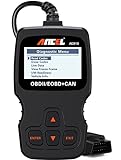
Affiliate links — we earn a commission at no extra cost to you.
Want to look up a specific code? Browse all OBD-II codes · Read the repair guides · More quizzes
Educational use only. Always follow your vehicle's service information and safety precautions when diagnosing or repairing.