Electrical & Charging (ASE A6)
Beginner → Intermediate · 40 questions
Verified ASE A6-style practice questions covering general electrical diagnosis (Ohm's law, series/parallel, opens & shorts, voltage drop, relays, fuses), batteries, starting and charging systems, lighting, instrument cluster & body electrical, and accessories — each with a plain-English explanation that teaches the why.
-
1. A 12-volt automotive battery sits overnight, engine off. You measure 12.6 V at the terminals. What does this reading tell you?
- A. The battery is fully charged and at a healthy resting state of charge ✓
- B. The battery is dead and must be replaced
- C. The alternator is currently overcharging the battery
- D. The battery is at roughly 50% charge and needs topping off
Answer: A — The battery is fully charged and at a healthy resting state of charge. A rested (no surface charge, no load) reading of about 12.6 V indicates a fully charged 12 V battery (six cells at ~2.1 V each). Around 12.4 V is ~75%, 12.2 V is ~50%, and 12.0 V or below is roughly 25% or less. Resting voltage tells you state of charge only, not whether the battery can still deliver cranking current. Takeaway: 12.6 V rested = full charge, but you still need a load test to judge health.
-
2. With the engine running at about 1,500 rpm, a good charging system should show battery voltage of approximately:
- A. 10.5 to 11.5 V
- B. 13.5 to 14.7 V ✓
- C. 12.2 to 12.6 V
- D. 15.5 to 16.5 V
Answer: B — 13.5 to 14.7 V. A working alternator and voltage regulator raise system voltage above resting battery voltage to push current back into the battery and run the car's loads, typically 13.5 to 14.7 V. Seeing only ~12.6 V or less with the engine running means the alternator isn't charging. Sustained readings above ~15 V indicate an overcharge condition that can boil off electrolyte and damage electronics. Takeaway: charging voltage lives in the 13.5–14.7 V band.
-
3. A battery reads a healthy 12.6 V resting, but the engine cranks slowly and then won't crank at all. The most useful next test is to:
- A. Replace the alternator, since 12.6 V means it isn't charging
- B. Add water to the cells and recharge for 24 hours
- C. Perform a load test (or conductance/CCA test) to see if the battery holds voltage under load ✓
- D. Measure resting voltage again the next morning
Answer: C — Perform a load test (or conductance/CCA test) to see if the battery holds voltage under load. Resting voltage only shows state of charge, not capacity. A battery with failing plates or low cold-cranking amps (CCA) can read a full 12.6 V at rest yet collapse the instant it's asked to deliver hundreds of amps. A load test (or an electronic conductance/CCA tester) applies a real or simulated load and watches whether voltage stays up. Takeaway: good voltage + weak cranking = load-test the battery before condemning anything else.
-
4. During a load test, a properly sized load is applied for about 15 seconds. The battery is considered good if, at the end of the test, terminal voltage stays at or above approximately:
- A. 8.0 V
- B. 11.5 V
- C. 12.4 V
- D. 9.6 V ✓
Answer: D — 9.6 V. In a classic carbon-pile load test, the load is set to about half the battery's CCA rating for ~15 seconds (at roughly 70°F). A healthy battery holds at or above ~9.6 V under that load. Dropping below ~9.6 V indicates a weak or failing battery. (The threshold is temperature-compensated; colder batteries are allowed slightly lower.) Takeaway: ~9.6 V under load at room temperature is the pass/fail line.
-
5. CCA (cold cranking amps) on a battery label primarily describes:
- A. The amps the battery can deliver for 30 seconds at 0°F while staying above 7.2 V ✓
- B. How many amp-hours of reserve capacity the battery stores
- C. The maximum charging current the alternator may send to it
- D. The voltage the battery holds while fully rested
Answer: A — The amps the battery can deliver for 30 seconds at 0°F while staying above 7.2 V. CCA is defined as the current a fully charged battery can deliver for 30 seconds at 0°F (−18°C) while maintaining terminal voltage of at least 7.2 V. It's a cold-weather cranking rating, not a measure of storage capacity (that's reserve capacity or amp-hours) and not a charging spec. Matching or exceeding the vehicle's required CCA matters most in cold climates. Takeaway: CCA = cold cranking muscle, measured at 0°F.
-
6. You're checking parasitic (key-off) draw. After the modules have gone to sleep, a typical acceptable key-off current on a modern vehicle is in the range of:
- A. About 1 to 2 amps
- B. Under about 50 milliamps (tens of milliamps) ✓
- C. About 5 to 10 amps
- D. Zero milliamps exactly, or there is a fault
Answer: B — Under about 50 milliamps (tens of milliamps). Modern cars keep clocks, alarms, and module memory alive, so a small constant draw is normal, typically tens of milliamps, commonly cited as roughly under 50 mA once everything sleeps (some vehicles spec a bit higher). A draw of an amp or more will flatten a battery overnight and points to a stuck relay, lit trunk/glovebox lamp, or a module not powering down. Takeaway: healthy key-off draw is tens of milliamps, not amps.
-
7. When measuring parasitic draw with a multimeter in series on the milliamp range, why must you wait several minutes (or use the proper procedure) before reading the value?
- A. The meter needs time to warm up its internal shunt
- B. The battery surface charge must dissipate first
- C. Modules stay awake for a timeout period after the door is opened or the circuit is disturbed, so the draw starts high and then drops ✓
- D. The alternator diodes need time to cool down
Answer: C — Modules stay awake for a timeout period after the door is opened or the circuit is disturbed, so the draw starts high and then drops. Opening a door or breaking the circuit to insert the meter wakes the body control modules. They stay awake for a timeout (often several minutes to half an hour) before going back to sleep, so the current reads high at first and then settles. Reading too early gives a false 'excessive draw.' Many techs use a low-current clamp meter to avoid breaking the circuit at all. Takeaway: let the modules sleep before trusting the number.
-
8. A voltage-drop test on the battery-positive cable is done with the circuit loaded (e.g., cranking). You put the meter across the cable, from battery post to starter terminal. A good cable should show a drop of about:
- A. 0 V exactly under all conditions
- B. About 2 to 3 V
- C. Equal to full battery voltage, ~12 V
- D. Less than about 0.2 to 0.5 V ✓
Answer: D — Less than about 0.2 to 0.5 V. Voltage drop measures resistance where it matters: under load. A clean, tight cable should drop only a few tenths of a volt; a common guideline is under ~0.2 V per connection and roughly under 0.5 V across a whole cable/ground path. A large drop (a volt or more) reveals corrosion or a loose connection stealing voltage the starter never sees, even though the cable looks fine and ohms out okay. Takeaway: test under load, and keep drops to a few tenths of a volt.
-
9. A car has wandering, unrelated symptoms: dim lights, erratic gauges, a stored sensor code, and hard starting. An experienced tech suspects a single root cause. The classic culprit is:
- A. A bad ground (poor engine-to-body or battery-to-chassis ground connection) ✓
- B. A blown cabin fuse
- C. A failed cabin air filter
- D. Low tire pressure tripping the TPMS
Answer: A — A bad ground (poor engine-to-body or battery-to-chassis ground connection). Every circuit's current must return to the battery negative through grounds. A corroded or loose ground forces current to find alternate paths, causing voltage drops and odd, seemingly unrelated faults across many systems at once: dim lights, jumpy gauges, false sensor readings, and weak cranking. That's why a bad ground 'mimics' a dozen different failures. Always verify grounds (voltage-drop test the ground side) before chasing individual components. Takeaway: multiple unrelated gremlins = suspect a ground.
-
10. Compared with a conventional flooded lead-acid battery, an AGM (absorbed glass mat) battery:
- A. Uses a liquid electrolyte you can top off with water
- B. Is sealed, spill-resistant, handles deep cycling and vibration better, and often needs an AGM charge setting ✓
- C. Stores energy chemically as lithium rather than lead-acid
- D. Cannot be tested with a normal load or conductance tester
Answer: B — Is sealed, spill-resistant, handles deep cycling and vibration better, and often needs an AGM charge setting. AGM batteries hold their electrolyte in glass-mat separators, so they're sealed (no water to add), spill-resistant, more tolerant of vibration and deep discharge, and well suited to start-stop systems. They're still lead-acid chemistry, just packaged differently, and they can be load/conductance tested normally. Many chargers have an AGM mode because AGM prefers a slightly different, voltage-limited charge profile. Takeaway: AGM is sealed lead-acid, tougher but charge-profile sensitive.
-
11. A customer says the car won't crank: just a click, no engine rotation, but the dash lights and radio work. Where should diagnosis start?
- A. The alternator output, since no-crank means the alternator failed
- B. The fuel pump and injectors
- C. The battery state of charge, terminals/cables, and starter circuit (a no-crank is a starting-system problem) ✓
- D. The catalytic converter and O2 sensors
Answer: C — The battery state of charge, terminals/cables, and starter circuit (a no-crank is a starting-system problem). No-crank is a starting-system issue: the battery must have enough charge AND the ability to deliver cranking current through clean connections to the starter. A single click with dash lights on often means a weak/discharged battery, corroded terminals, or a bad starter/solenoid. The alternator only charges while the engine runs, so it can't cause a no-crank. Confirm battery voltage and connections, then voltage-drop the cables, then test the starter. Takeaway: no-crank = battery/connection/starter, not the alternator.
-
12. A different customer says the battery keeps going dead after a day or two of driving, and the dash charge/battery light glows while driving. This pattern most directly points to:
- A. A weak starter motor
- B. A failed fuel injector
- C. Normal behavior for any AGM battery
- D. A no-charge problem: the alternator or its regulator/wiring isn't replenishing the battery ✓
Answer: D — A no-charge problem: the alternator or its regulator/wiring isn't replenishing the battery. If the car starts and runs but the battery keeps draining and the charge light is on while driving, the charging system isn't keeping up. Confirm by measuring voltage at the battery with the engine running: a good system reads ~13.5–14.7 V, while a no-charge alternator reads near resting voltage (~12.6 V or falling) under load. Causes include a failed alternator, bad voltage regulator, broken/slipping belt, or a blown fusible link. Takeaway: runs-but-dies-overnight + charge light = no-charge (alternator side).
-
13. In a simple circuit at a fixed voltage, if the total resistance increases, what happens to the current?
- A. Current decreases ✓
- B. Current increases
- C. Current stays exactly the same
- D. Voltage drops to zero
Answer: A — Current decreases. Ohm's law: current = voltage ÷ resistance (I = V/R). With voltage held constant, raising resistance lowers current. This is why a corroded, high-resistance connection 'starves' a component of current and makes it work weakly or intermittently. Conversely, lowering resistance (toward a short) raises current sharply.
-
14. In a series circuit, which statement is true?
- A. The voltage is the same across every component
- B. The current is the same through every component, and the source voltage is divided among them ✓
- C. Total resistance decreases as you add components
- D. Each component gets the full source voltage
Answer: B — The current is the same through every component, and the source voltage is divided among them. A series circuit is a single path, so the same current flows through every component, and the source voltage divides across the components in proportion to their resistance (their voltage drops add up to source voltage). That's the basis of voltage-drop testing. Equal voltage across branches and decreasing total resistance describe PARALLEL circuits.
-
15. In a parallel circuit, which statement is true?
- A. The current is identical in every branch regardless of resistance
- B. Total resistance increases as you add branches
- C. Each branch sees the same voltage, and total resistance is less than the smallest branch ✓
- D. Voltage divides across the branches
Answer: C — Each branch sees the same voltage, and total resistance is less than the smallest branch. In a parallel circuit each branch connects across the same two points, so each sees the full source voltage; the branch currents add together, and total resistance drops below the smallest single branch (more paths = easier flow). Most vehicle loads are wired in parallel so each gets full voltage and can operate independently. Equal current and voltage-dividing describe SERIES circuits.
-
16. An electrical component is completely dead, and you measure infinite resistance (OL) through its circuit. This indicates:
- A. A short to ground
- B. Too much current flowing
- C. A perfectly normal circuit
- D. An open circuit — a break in the path so no current can flow ✓
Answer: D — An open circuit — a break in the path so no current can flow. An open circuit is a break in the path — a blown fuse, broken wire, corroded/disconnected connector, or failed switch — so current can't flow and the component is dead. An ohmmeter reads infinite/OL across an open. A short to ground, by contrast, causes EXCESSIVE current (usually blowing a fuse), not a dead open. Locating the open (with voltage or continuity checks) is the diagnosis.
-
17. A short to ground in a circuit most commonly causes what?
- A. Excessive current flow that blows the fuse protecting the circuit ✓
- B. Reduced current and a dim component
- C. No effect until the next start
- D. Higher system voltage
Answer: A — Excessive current flow that blows the fuse protecting the circuit. A short to ground is an unintended low-resistance path to ground that bypasses the load. With little resistance, current spikes (Ohm's law) and the circuit's fuse blows to protect the wiring. That's different from a high-resistance fault (which dims/weakens a component) or an open (dead circuit). A blown fuse that pops again immediately is the classic short-to-ground signature.
-
18. A circuit's fuse blows again immediately every time you replace it. What is the correct diagnostic approach?
- A. Install a fuse with a higher amperage rating to stop it blowing
- B. Find and repair the short to ground (or overload) — do not install a larger fuse ✓
- C. Wrap the fuse in foil
- D. Leave the circuit unfused
Answer: B — Find and repair the short to ground (or overload) — do not install a larger fuse. A repeatedly blowing fuse means an overcurrent fault — almost always a short to ground. The fix is to locate and repair the short (visual inspection, wiggle testing, or a powered method like a short-finder), then install the correct fuse. NEVER upsize the fuse, foil it, or bypass it: the fuse is sized to protect the WIRING, and defeating it lets the wire overheat and start a fire.
-
19. Why must you never replace a blown fuse with one of a higher amperage rating?
- A. Higher-rated fuses drain the battery
- B. It would overcharge the alternator
- C. The fuse protects the wiring; a higher rating lets the wire overheat and risks a fire ✓
- D. It improves performance with no downside
Answer: C — The fuse protects the wiring; a higher rating lets the wire overheat and risks a fire. A fuse is the weakest, sacrificial link sized to blow BEFORE the circuit's wiring overheats. Installing a higher-amp fuse removes that protection: under a fault the wiring can carry too much current, overheat, melt insulation, and cause an electrical fire. Always use the rating specified for that circuit, and fix the reason it blew. It has nothing to do with battery drain or alternator output.
-
20. How does an automotive relay work?
- A. It steps battery voltage up to 120 volts
- B. It stores electricity like a battery
- C. It converts AC to DC
- D. A small current through the coil creates a magnetic field that closes the contacts, switching a separate high-current circuit ✓
Answer: D — A small current through the coil creates a magnetic field that closes the contacts, switching a separate high-current circuit. A relay lets a low-current control signal switch a high-current load. Current through the control coil (terminals 85/86) makes an electromagnet that pulls the contacts closed, connecting the load terminals (30 to 87). This keeps heavy current out of switches and the cabin. You can test one by energizing the coil and checking continuity from 30 to 87, comparing coil resistance to spec, or swapping in a known-good identical relay. It doesn't transform voltage, store charge, or rectify AC.
-
21. A corroded, high-resistance connection in a circuit most commonly causes which symptoms?
- A. A voltage drop across the connection, with dim/intermittent operation and possible heat at the joint ✓
- B. Increased current and brighter operation
- C. A guaranteed blown fuse
- D. Higher charging voltage
Answer: A — A voltage drop across the connection, with dim/intermittent operation and possible heat at the joint. Resistance at a corroded or loose connection drops voltage across that point (so the component downstream gets less), causing dim, weak, or intermittent operation, and the resistance can make the joint heat up. A voltage-drop test across the connection under load reveals it — more than a few tenths of a volt is excessive. High resistance reduces current (it doesn't brighten things or necessarily blow a fuse); a short does the opposite.
-
22. When performing a voltage-drop test on a circuit's GROUND side, what reading indicates a good ground?
- A. A reading equal to full battery voltage
- B. A very low voltage drop (typically under about 0.1–0.2 V) measured across the ground path with the circuit loaded ✓
- C. Exactly 12.6 V
- D. Infinite resistance
Answer: B — A very low voltage drop (typically under about 0.1–0.2 V) measured across the ground path with the circuit loaded. A voltage-drop test measures voltage 'lost' across a connection or wire while the circuit carries its normal load. A good ground path drops almost nothing — generally under ~0.1–0.2 V. A higher drop means unwanted resistance (corrosion, loose ground strap, paint under the ground bolt). Reading near full battery voltage across the ground means the ground is essentially open. Voltage-drop testing under load is far more revealing than a static resistance check.
-
23. A starter current-draw test shows the starter pulling EXCESSIVE current while cranking slowly. What does this most likely indicate?
- A. A high-resistance (corroded) connection in the starter circuit
- B. A fully healthy starting system
- C. A faulty starter or a mechanical bind/drag in the engine ✓
- D. A blown interior light fuse
Answer: C — A faulty starter or a mechanical bind/drag in the engine. Excessive current draw with slow cranking points to the starter itself (worn bushings, shorted windings, dragging armature) or a mechanical problem making the engine hard to turn (seizing, hydrolock, heavy drag). By contrast, LOW current draw with slow/no cranking points to high resistance in the cables/connections (the circuit can't deliver enough current). Comparing actual draw to spec separates a bad starter/engine from a bad circuit.
-
24. A vehicle won't crank: turning the key produces NO click and no engine rotation, but the dash lights and radio work normally. Where should you look first?
- A. The engine's internal bearings
- B. The catalytic converter
- C. The windshield washer pump
- D. The starter control circuit — neutral-safety/range switch, ignition switch, starter relay, or its wiring ✓
Answer: D — The starter control circuit — neutral-safety/range switch, ignition switch, starter relay, or its wiring. Good dash lights mean the battery and main power are fine, and NO click means the starter solenoid isn't even being commanded — so the fault is in the low-current control circuit that tells the starter to engage: the park/neutral (range) switch, ignition switch, clutch switch, starter relay, or the wiring between them. (A single click with no crank would instead point to the solenoid/starter or a weak high-current path.) Engine internals, the cat, and the washer pump are unrelated.
-
25. An automatic-transmission vehicle cranks in NEUTRAL but not in PARK (or won't crank in either). What component is the likely cause?
- A. The park/neutral position (range) switch — faulty, misadjusted, or its circuit ✓
- B. The alternator diode
- C. A clogged fuel injector
- D. The cabin air filter
Answer: A — The park/neutral position (range) switch — faulty, misadjusted, or its circuit. The park/neutral position switch (transmission range switch) only allows the starter to operate in Park or Neutral, for safety. If it cranks in one position but not the other, or not at all, the switch is faulty, out of adjustment, or has a wiring problem — a classic no-crank cause that's often overlooked behind 'bad starter.' The alternator diode, an injector, and the cabin filter have nothing to do with the crank-enable circuit.
-
26. What two jobs does a starter solenoid perform when you turn the key to START?
- A. It charges the battery and runs the fuel pump
- B. It shifts the starter drive (pinion) into the flywheel ring gear AND closes the high-current contacts feeding the starter motor ✓
- C. It opens the EGR valve and fires the coils
- D. It only makes a clicking sound for diagnostics
Answer: B — It shifts the starter drive (pinion) into the flywheel ring gear AND closes the high-current contacts feeding the starter motor. The starter solenoid does two things at once: its plunger mechanically engages the starter drive pinion with the engine's flywheel/flexplate ring gear, and at the end of travel it closes a heavy-duty contact (the main 'battery-to-motor' connection) so full current reaches the starter motor. A single click with no crank often means the solenoid pulls in but the main contacts (or the motor) can't carry the load. It doesn't charge the battery or run other systems.
-
27. A failed diode in the alternator's rectifier most commonly causes what?
- A. The battery to overcharge above 16 V
- B. A no-crank condition
- C. AC ripple in the output and possibly low charging output, causing flickering lights or erratic electronics ✓
- D. Higher fuel pressure
Answer: C — AC ripple in the output and possibly low charging output, causing flickering lights or erratic electronics. The alternator generates AC, and the rectifier diodes convert it to DC. A shorted or open diode lets AC 'ripple' pass into the system and usually lowers output, which can flicker lights, upset sensitive electronics, and undercharge the battery. You test for it with a DMM on AC volts at the battery (should be very low, generally well under ~0.5 V AC) or by viewing the ripple pattern on a scope. A bad diode doesn't overcharge, prevent cranking, or affect fuel pressure.
-
28. The charging system is putting out a steady 15.5–16 V and the battery is getting hot and losing electrolyte. What is the most likely cause?
- A. A weak battery that needs replacing only
- B. A slipping alternator belt
- C. A clogged cabin air filter
- D. A faulty voltage regulator (overcharging) ✓
Answer: D — A faulty voltage regulator (overcharging). Charging voltage should hold roughly 13.5–14.7 V. A sustained 15.5–16 V is overcharging, which boils off electrolyte, cooks the battery, and can damage electronics — caused by a failed voltage regulator (built into most modern alternators) or, less often, a charging-control/wiring fault. A slipping belt or high resistance causes UNDERcharging, not overcharging. The cabin filter is unrelated. Overcharging is as harmful as undercharging.
-
29. Which of these is a common cause of an UNDERcharging condition (battery slowly going dead, low charging voltage)?
- A. A slipping/loose drive belt, a failing alternator or regulator, or high-resistance connections in the charging circuit ✓
- B. A brand-new battery
- C. Correctly torqued lug nuts
- D. A clean engine air filter
Answer: A — A slipping/loose drive belt, a failing alternator or regulator, or high-resistance connections in the charging circuit. Undercharging shows up as low system voltage and a battery that drains over time. Common causes: a glazed/slipping or loose serpentine belt, a worn alternator (bad diodes, brushes, regulator), or voltage-dropping resistance in the charging wiring/grounds (including a blown fusible link). Voltage-drop testing the charging circuit and load-testing the alternator pin it down. A new battery, lug nuts, and the air filter have nothing to do with charging output.
-
30. How does an alternator generate electrical current?
- A. By chemical reaction like a battery
- B. By electromagnetic induction — a spinning magnetic field (rotor) induces AC in the stationary windings (stator), which diodes rectify to DC ✓
- C. By burning fuel directly into electricity
- D. By compressing air
Answer: B — By electromagnetic induction — a spinning magnetic field (rotor) induces AC in the stationary windings (stator), which diodes rectify to DC. An alternator works on electromagnetic induction: the engine spins the rotor, whose magnetic field sweeps past the stator windings and induces alternating current in them. The rectifier diodes then convert that AC into the DC the vehicle uses, while the voltage regulator controls field strength to hold output around 13.5–14.7 V. A battery uses a chemical reaction (different device); alternators don't burn fuel or compress air to make electricity.
-
31. One headlight (low beam) is out while the other works normally. What is the most likely cause?
- A. A discharged battery
- B. A failed body control module
- C. A burned-out bulb on the dead side (each headlight has its own bulb) ✓
- D. A bad alternator
Answer: C — A burned-out bulb on the dead side (each headlight has its own bulb). When just one side is out, the fault is almost always specific to that side — most commonly a burned-out bulb, or its connector/socket/ground. If BOTH headlights failed at once, you'd look at the shared parts: fuse, relay, headlight switch, ground, or the lighting control module. A dead battery, BCM, or alternator would affect far more than a single bulb. Start with the cheap, likely bulb.
-
32. When the driver presses the brake pedal, the tail/turn lights flicker or do something odd. This 'feedback' behavior most often points to:
- A. An overcharged battery
- B. A cracked windshield
- C. A worn brake rotor
- D. A bad ground in the lighting circuit, forcing current to backfeed through another circuit's ground ✓
Answer: D — A bad ground in the lighting circuit, forcing current to backfeed through another circuit's ground. When a lighting circuit loses its own ground, current looks for another path to ground — backfeeding through a different lamp's ground and making lights glow, flicker, or behave strangely when an unrelated circuit is activated. This 'feedback' is the classic fingerprint of a bad/shared ground. The fix is restoring the proper ground connection. It has nothing to do with charging, the windshield, or brake friction parts.
-
33. After installing LED bulbs in place of incandescent turn signals, the signals 'hyperflash' (blink very fast). Why, and what's the fix?
- A. LEDs draw much less current, so the flasher senses a 'bulb out' — fix with load resistors or an LED-compatible flasher/setting ✓
- B. The battery is overcharged — replace it
- C. The brake fluid is low — top it off
- D. The alternator is failing — replace it
Answer: A — LEDs draw much less current, so the flasher senses a 'bulb out' — fix with load resistors or an LED-compatible flasher/setting. Many flashers (and modules) detect a burned-out bulb by sensing reduced current and respond by flashing faster (hyperflash). LEDs draw far less current than incandescent bulbs, so the system thinks a bulb is out. The fix is to add load resistors to mimic the original current draw, or install an LED-compatible (electronic) flasher or enable the vehicle's LED setting. It's not a charging, brake-fluid, or alternator problem.
-
34. The brake lights stay on all the time, even with the engine off and no one touching the pedal. What is a likely cause?
- A. A weak alternator
- B. A misadjusted or failed brake light switch (or a missing/broken pedal stopper) ✓
- C. A clogged fuel filter
- D. Low tire pressure
Answer: B — A misadjusted or failed brake light switch (or a missing/broken pedal stopper). The brake light switch at the pedal closes the brake-lamp circuit when you press the pedal. If it's misadjusted, stuck closed, or its rubber pedal stopper crumbled (so the pedal never fully returns), the lights stay on constantly — which also drains the battery and can affect cruise control and shift-interlock. Brake lights that won't come on point to the same switch (open) or bulbs/wiring. The alternator, fuel filter, and tires are unrelated.
-
35. On a modern vehicle, ALL the instrument-cluster gauges are dead at once, though the engine runs. Where should you focus?
- A. A single coolant temperature sender
- B. One spark plug
- C. The cluster's power, ground, and network (data bus) connection — modern gauges are driven by data over the network ✓
- D. The muffler
Answer: C — The cluster's power, ground, and network (data bus) connection — modern gauges are driven by data over the network. Modern instrument clusters display values sent as data messages over the vehicle network (CAN/serial) and need their own power and ground. If EVERY gauge is dead together, suspect the cluster's power/ground or a lost network connection, not individual senders. If just ONE gauge reads wrong, you'd chase that circuit's sensor/sender or wiring. A single plug or the muffler has nothing to do with cluster operation.
-
36. What is the role of a body control module (BCM) in a modern vehicle?
- A. It rectifies AC to DC for charging
- B. It pressurizes the fuel rail
- C. It physically drives the camshaft
- D. It manages and multiplexes body-electrical functions (lighting, locks, wipers, chimes) and communicates over the data network ✓
Answer: D — It manages and multiplexes body-electrical functions (lighting, locks, wipers, chimes) and communicates over the data network. The BCM is a computer that controls and coordinates body-electrical functions — interior/exterior lighting, door locks, windows, wipers, warning chimes, and more — often replacing dozens of relays and miles of wiring by communicating with other modules over the data bus (multiplexing). Diagnosing body electrical now often means reading BCM data and codes. It doesn't rectify charging current, pressurize fuel, or drive the camshaft.
-
37. Why does it matter whether a circuit has 'constant' (battery) power versus 'switched' (ignition) power when diagnosing?
- A. Constant-power circuits are live with the key off (clock, memory, alarm); switched circuits are only live with the key on — knowing which guides the test ✓
- B. Constant power is always 5 volts and switched power is 12 volts
- C. Switched power circuits never use fuses
- D. Constant power only exists on diesels
Answer: A — Constant-power circuits are live with the key off (clock, memory, alarm); switched circuits are only live with the key on — knowing which guides the test. Some circuits are always hot (constant/battery power) for things like the clock, radio presets/memory, alarm, and keep-alive memory; others only get power with the ignition on (switched). Knowing which a circuit is tells you whether it SHOULD have voltage in a given key position — essential for not misdiagnosing a 'dead' circuit that's simply key-off, or for hunting a parasitic draw on a constant-power circuit. Both run at system voltage (~12 V) and both use fuses.
-
38. The heater/AC blower works only on the HIGHEST fan speed; the lower speeds do nothing. What is the most likely cause?
- A. A discharged battery
- B. A failed blower motor resistor (or final-stage controller) ✓
- C. A bad oxygen sensor
- D. A leaking radiator cap
Answer: B — A failed blower motor resistor (or final-stage controller). Lower blower speeds run the motor through a resistor pack (or an electronic final-stage controller) that drops voltage; the highest speed usually bypasses the resistor and feeds the motor directly. So when only HIGH works, the resistor/final-stage unit has failed — a very common fix. If NO speeds worked, you'd suspect the motor, fuse, switch, or power/ground. The battery, O2 sensor, and radiator cap are unrelated to fan-speed control.
-
39. The horn does not work at all. Besides the horn itself, which components should you check?
- A. The catalytic converter and O2 sensor
- B. The thermostat and water pump
- C. The horn relay, the horn switch/clock spring in the steering wheel, the fuse, and the ground ✓
- D. The brake pads and rotors
Answer: C — The horn relay, the horn switch/clock spring in the steering wheel, the fuse, and the ground. A dead horn circuit could be the horn(s), but also the horn relay, the steering-wheel horn switch and its clock spring (the coiled contact that maintains the circuit as the wheel turns), the fuse, or the ground. A bad clock spring is a common, easily missed cause (and can also disable the airbag/steering-wheel controls). Engine emissions, cooling, and brake parts have nothing to do with the horn.
-
40. On a power-window system, none of the windows work from the driver's master switch, but checking shows the system has power and ground. What is a likely cause?
- A. A worn serpentine belt
- B. A clogged PCV valve
- C. A failing thermostat
- D. A failed master (driver's) switch or its circuit, since it routes control for the other windows ✓
Answer: D — A failed master (driver's) switch or its circuit, since it routes control for the other windows. On many vehicles the driver's master switch (or its module) routes power/control to the individual window motors. If all windows are dead from the master switch but the system has power and ground, the master switch or its circuit/module is a prime suspect (a single window dead from both its own and the master switch points instead to that motor/regulator). The belt, PCV, and thermostat are engine-mechanical and unrelated to window circuits.
Want to go deeper?
Reputable study materials and a scan tool to actually master this — honest picks, not filler.
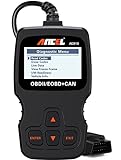
Affiliate links — we earn a commission at no extra cost to you.
Want to look up a specific code? Browse all OBD-II codes · Read the repair guides · More quizzes
Educational use only. Always follow your vehicle's service information and safety precautions when diagnosing or repairing.